The Book
A plain-English guide to the insurance you already pay for, from a contractor, appraiser and umpire who has seen it from every side.
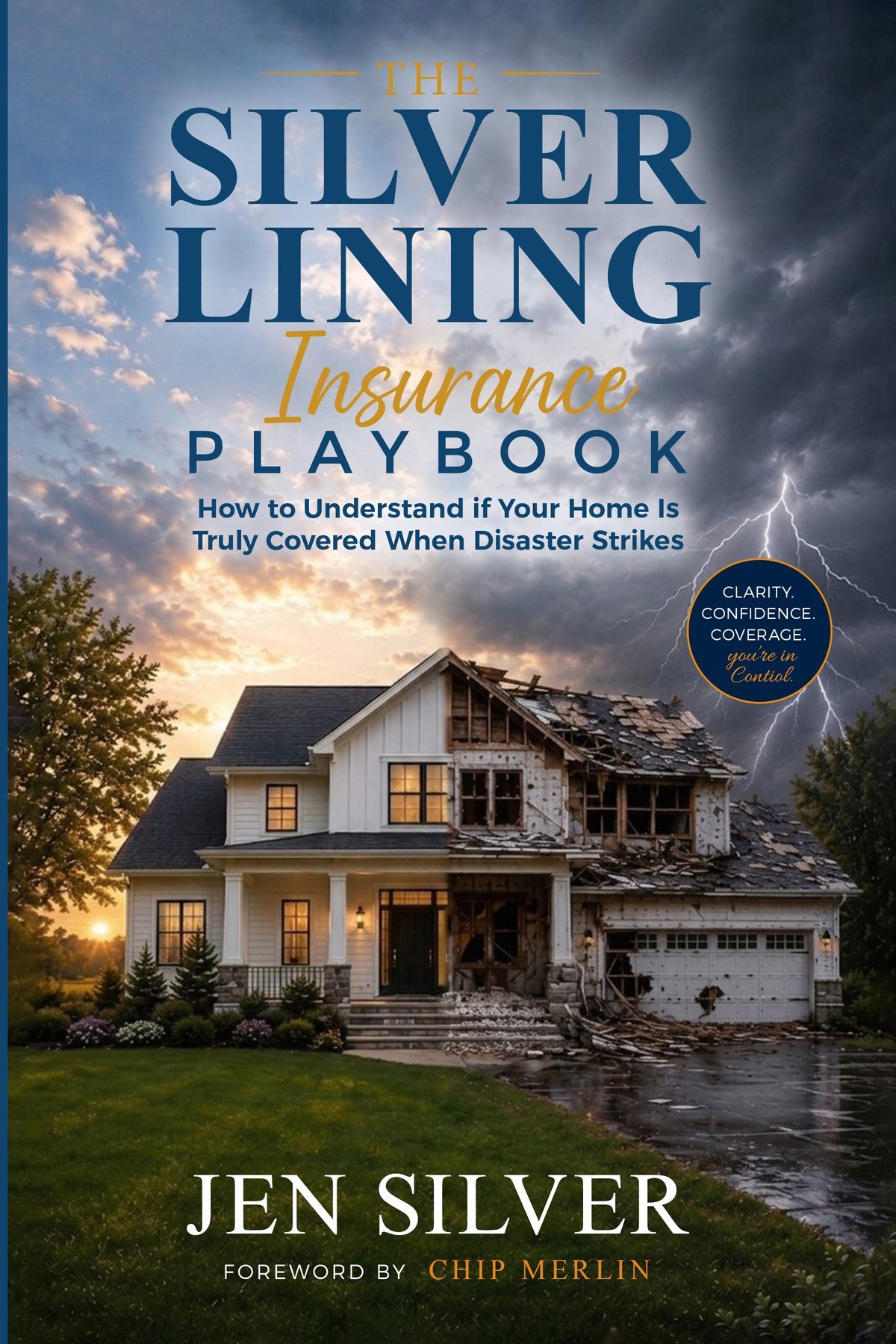
The book
You have insurance.
That doesn't mean you're covered the way you think you are.
How to understand if your home is truly covered when disaster strikes. A homeowner's guide to your property and casualty insurance.
Most people meet their homeowners policy for the first time on one of the worst days of their year, with an adjuster on the phone and water coming through the ceiling.
This is the version you can read before that happens. No insurance background needed, and nothing in it assumes you find any of this interesting.
Foreword by
Chip Merlin
· Founder, Merlin Law Group
Who it's for
This book is for you if
Written for homeowners, not for the industry. It takes what people in the trade deal with every week and puts it in plain English, while there is still time to do something about it.
01
You have never read your own policy
Almost nobody has. It arrived in a stack of closing documents, it runs about forty pages, and half the words in it are defined somewhere else in the same forty pages.
02
Something has happened and everyone is telling you something
The adjuster says one thing. The contractor who knocked on the door says another. Your neighbor swears by whatever worked for him. None of them are reading from your policy.
03
Nothing has happened yet
Then you are in the good version of this. Coverage gets decided long before anything goes wrong. A claim only shows you what you already bought.
Inside
What it answers
Jen has been asked every one of these. Usually a few days too late to do anything about the answer.
✓
Why a roof paid at Actual Cash Value can leave you holding the bill
✓
Whether your deductible is a flat number or a percentage, and of what
✓
What happens to your roof coverage as the roof gets older
✓
Why bringing a repair up to code can cost more than the damage did
✓
Who each person in a claim actually works for
✓
The deadlines in your own policy that nobody calls to remind you about
The free companion toolkit
Seventeen pages of checklists, pulled out of the book so you can print them and write on them. One for renewal time, one for the day something happens, and the questions to ask each person who turns up during a claim.
You don't have to wait for the book to start using it.
That is what is in it. It is out now.
Contents
Three parts, 14 chapters
Read it through while things are quiet. Then keep it where you can find the right chapter in a hurry.
Part 1
Understanding What You Have
What you actually bought. Read this part while nothing is wrong and changing your mind is still cheap.
01
The Risk You Didn't See Coming
02
The Language of Your Policy
03
What Your Policy Actually Is
04
The 7 Most Important Things to Know About Your Policy
05
What's Actually Covered, and Where It Gets Tricky
06
How Coverage Changes Are Affecting You Now
Part 2
From Damage to Decision
From the damage to the finished repair. Who to call first, what you are being asked to sign, and why the money shows up in pieces.
07
When Something Happens, Slow Down First
08
Let's Meet the Players
09
Getting the Claim Started
10
The Claim Decision, the Money, and the Repairs
11
When the Claim Does Not Go the Way You Expected
Part 3
Protecting Yourself Moving Forward
Maintenance, savings, and the pressure that turns up in your driveway after a storm.
12
Your Home Needs a Plan
13
Red Flags Every Homeowner Should Know
14
Take Back Control
Fourteen chapters, written so you can find the one you need in a hurry.
The next step
The Property Savings Account
There is one problem in the book that the book can only teach you to work around.
Roofs wear out. Water heaters go. None of that is a surprise, and none of it is a claim. What changed is that a lot of families quietly stopped putting money aside for it, because somewhere along the way they were told a storm would take care of it. Then deductibles stopped being a flat thousand dollars and started being a percentage of the house.
A Property Savings Account would be somewhere to put that money on purpose, the way a health savings account works for medical costs. Jen has written a paper on what it would take to build one: who would hold the accounts, how they would be funded, how they would be taxed, and the places the idea could go wrong.
It is not a bill and it does not ask anyone to vote for one. It is written for the people who would have to build the thing if it ever got built: legislators, banks and credit unions, insurers, housing groups, employers, and the consumer advocates whose job would be to check the math.
Get the paper
It isn't published yet. If you work in policy, lending, insurance or housing, leave an address and Jen will send it over when it is.
About the author
Written by someone who has sat on both sides of the claim
Jen Silver is the founder and president of Roofing Utah, a woman-owned roofing company in Utah, and the founder of RejuvaRoofs. Her work covers contracting, property inspections, appraisal, umpiring and expert-witness matters, so she has seen a property loss from more than one side of the table.